

 Schedule


Our 2024-2025 Concert Schedule
Printable Schedule (PDF): SJCMS 2024-2025 Brochure
— Programs are subject to change —
|
October 13, 2024 |
Gropius Quartet (Germany) Haydn, Mendelssohn, and Dvořák “... fascinating inner unity and in perfect balance” – Cellesche Zeitung “... transporting vitality and elan” – Die Rheinpfalz-Speyer |
|
November 10, 2024 |
Pacifica Quartet (Indiana) Samuel Barber, George Crumb, and Shostakovich “The playing is nothing short of phenomenal.” – The Daily Telegraph, London |
|
January 12, 2025 |
Trio Bohémo (Czech Republic) Schubert, Dvořák, and Marios Christou “Trio Bohémo were on fire. The connection between the musicians was symbiotic. They are the music that this world needs.” – London reviewer of 2023 Wigmore Hall début “Precision, dedication and a spark of magic.” – Göttingen critic |
|
February 22, 2025 |
Owen Dalby, Christopher Costanza, Ilya Yakushev Piano Trio Rachmaninoff, Bohuslav Martinů, Nadia Boulanger, Andrea Casarrubios, Shostakovich, and Brahms “... little short of heroic.” – The New York Times |
|
March 16, 2025 |
Esmé Quartet (South Korea and Bay Area) Kui Dong, Juri Seo, Ravel, and Beethoven “[They] play with depth and maturity ...” – Suddeutsche Zeitung “Lyricism and airy limpidity, ... profundity and unexpected allure.” (5 stars) |
|
May 17, 2025 |
Quinteto Latino (Bay Area) Latina/o/e composers of the Americas “Consummate virtuosity” – Maria Nockin, Fanfare Magazine |
Concerts
are held at St. Francis Episcopal Church, in the Willow Glen
area of San Jose, 1205 Pine Avenue at the corner of Newport Avenue.
|
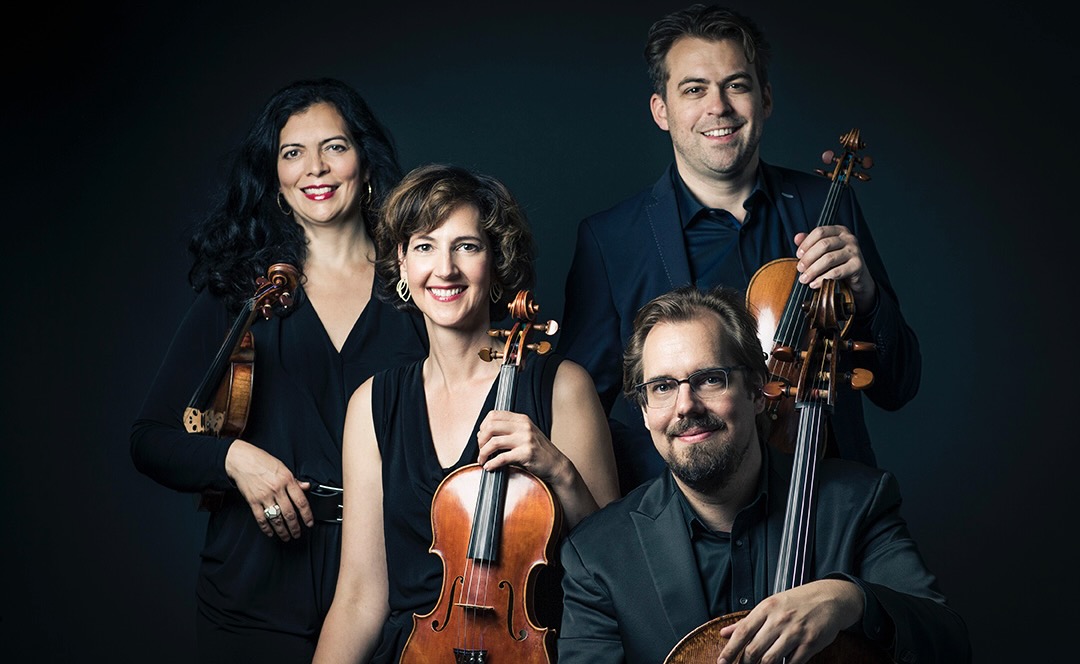
October 13, 2024 Gropius Quartet PROGRAM Haydn Quartet in E-flat major, Op.33 #2 (1781) Mendelssohn String Quartet in F minor, Op.80 (1847) Dvořák Quartet #12 in F major, Op.96 “American” (1893) |
 |
MUSIC
Haydn's Op.33 Quartets achieve a synthesis of melodic grace, learned form, and emotional intensity. • Mendelssohn's impassioned F minor Quartet, a dark tour-de-force, is his emotional elegy for his sister's Fanny's death. • The flowing, spacious and bright music of Dvořák’s American Quartet reflects the tranquility he found summering in the Bohemian farming community of Spillville, Iowa, in 1893.
ARTISTS
The Gropius Quartet, formed by established soloists and chamber musicians who were students together at Menuhin Music Academy Gstaad and the Juilliard School,
débuted in Weimar, Germany, in 2018. Their combined intuition and experience produces an electric dynamic, and their playing has the clarity and boldness
of their namesake–Bauhaus architect Walter Gropius.
“... fascinating inner unity and in perfect balance” (Cellesche Zeitung)
“... transporting vitality and elan” (Die Rheinpfalz-Speyer)

|
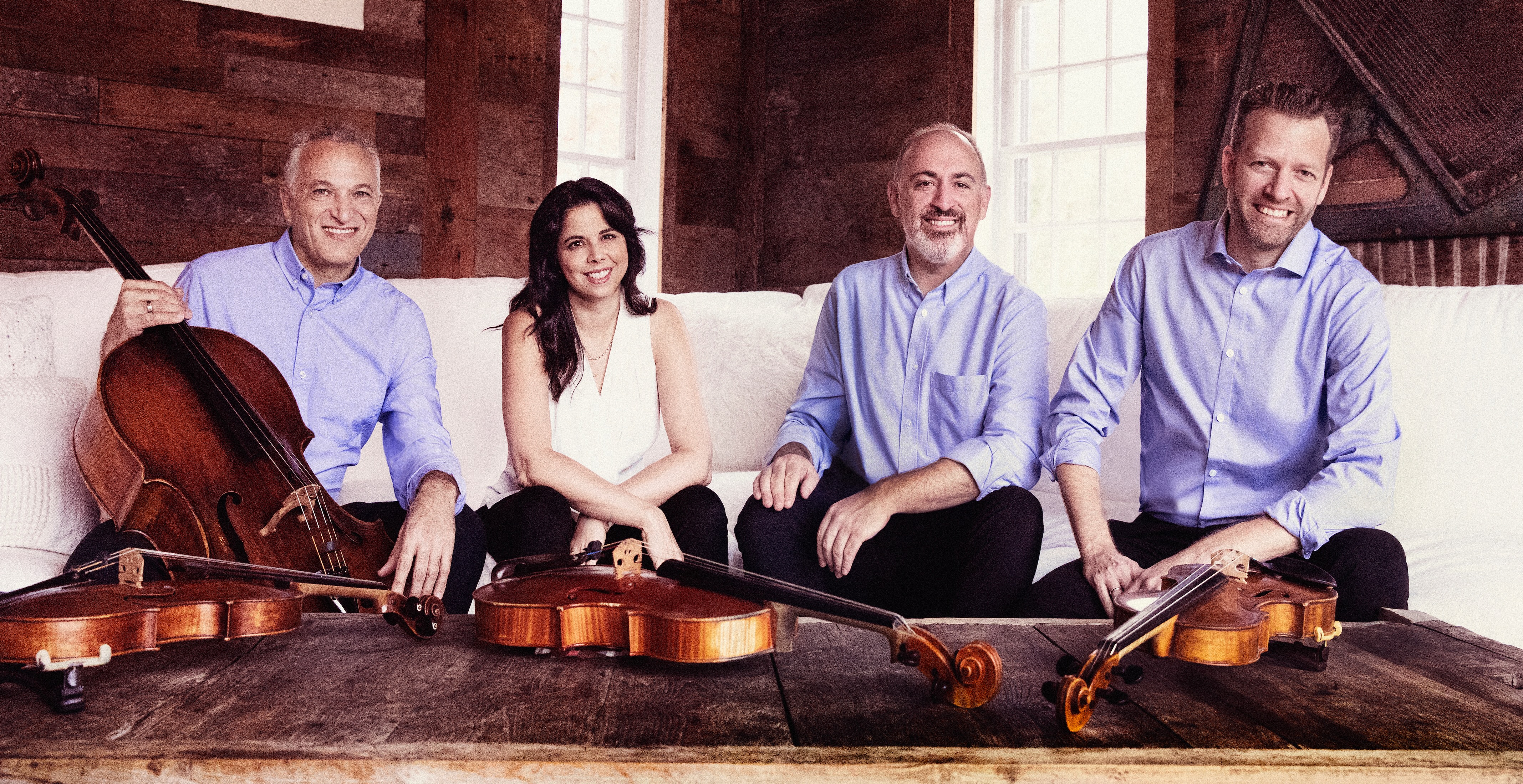
November 10, 2024 Pacifica Quartet PROGRAM Samuel Barber String Quartet in B minor, Op.11 (1935) George Crumb Black Angels, “Thirteen images from The Dark Land” Shostakovich String Quartet #2 in A major, Op.68 (1944) |
 |
MUSIC
Three memorial works: Barber's String Quartet includes his Adagio for Strings which has brought a cathartic calm in times of grief and mourning. • George Crumb's revolutionary work Black Angels is a threnody (ode or lament) for the Vietnam War and “a kind of parable on our troubled contemporary world” (Crumb 1971). • Shostakovich's Op.68 is his first great string quartet. It is vividly original in style, bold in design, and individual in character. It was dedicated as a memorial to a fellow composer.
ARTISTS
With a three-decade career and multiple Grammy Awards, the Pacifica Quartet has achieved international recognition as one of the finest chamber
ensembles performing today. The Quartet is known for its virtuosity, exuberant performance style, and often-daring repertory choices. The Pacifica Quartet is currently in residence at
the Indiana University Jacobs School of Music.
“The playing is nothing short of phenomenal.” (The Daily Telegraph, London)
|
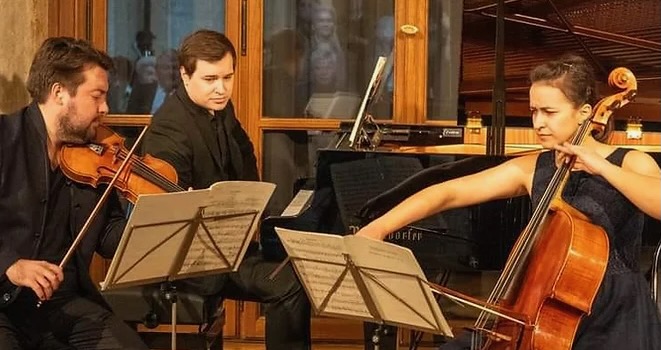
January 12, 2025 Trio Bohémo PROGRAM Schubert Piano Trio #2 in E-flat major, Op.100, D.929 (1827) Dvořák Piano Trio in E minor, Op.90 “Dumky” (1891) Marios Christou Dvořák on Cyprus (2022) |
 |
MUSIC
Schubert's E-flat major Trio is gigantic in length and filled with thematic ideas and constant transformations, intensity and passion, as well as joy, grace and beauty. • Dvořák's beloved Dumky Trio captures the melodic freshness and rhythmic verve of Czech folk music in six dumka (poetic ballad) movements of yearning, melancholy and wild gaiety. • Cyprian-born composer Marios Christou playfully imagines how Dvořák, upon visiting Cyprus, might incorporate its folk music in his compositions.
ARTISTS
In the years since its founding, the Trio Bohémo's talent and deep musicality have been recognized and validated by numerous awards. The London
reviewer of their 2023 Wigmore Hall début said, “Trio Bohémo were on fire. The connection between the musicians was symbiotic. They are the music that this world needs.”
“Precision, dedication and a spark of magic.” (Göttingen critic)
|
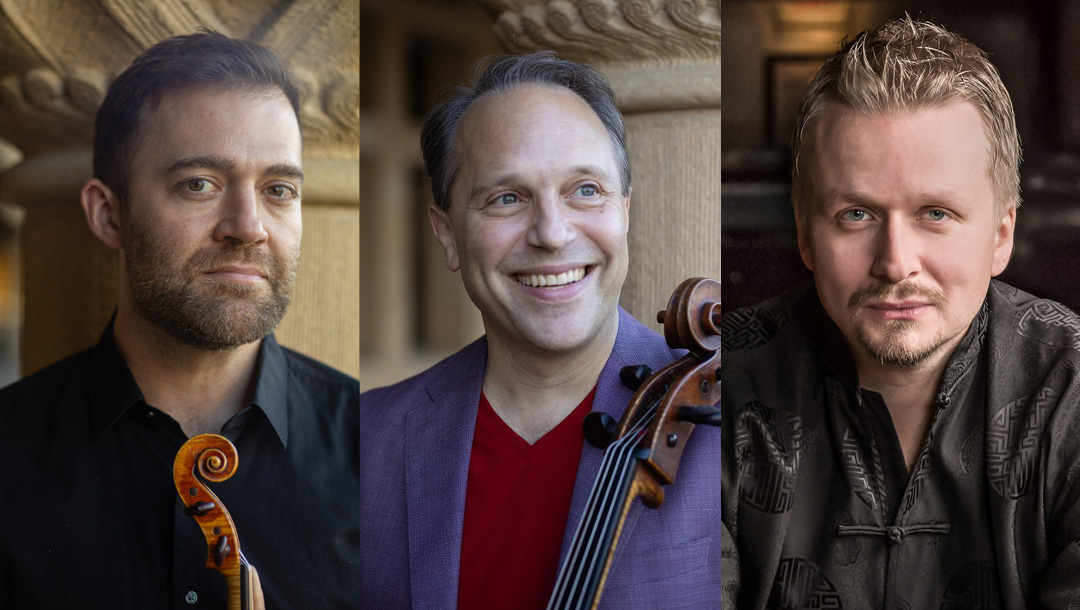
February 22, 2025 Dalby, Costanza, and Yakushev Piano Trio PROGRAM Rachmaninoff Vocalise for Violin & Piano (1915) Bohuslav Martinů Duo #1 for Violin & Cello, H.157 (1927) Nadia Boulanger Trois pièces pour violoncelle et piano (1914) Andrea Casarrubios Silbo (2021) Shostakovich Prelude & Fugue #24 in D minor (1950-51) Brahms Trio #1 in B major, Op.8 (revised version) (1889) |
 |
MUSIC
Rachmaninoff's enchanting Vocalise–beloved for its melodic beauty–has been transcribed in many ways. • Martinů's Duo delights in close interplay between violin and cello. • Nadia Boulanger's three pieces have quintessentially French texture and rhythm. • Casarrubios' Silbo (“whistle” in Spanish) was inspired by whistled languages which carry long distances. • Shostakovich's Preludes and Fugues were inspired by J.S. Bach. • The revised Op.8 Trio reflects both the young and the elder Brahms.
ARTISTS
As members of the St. Lawrence String Quartet from 2015 and 2003, respectively, Owen Dalby and Christopher Costanza
performed on all the major chamber series in North America and Europe. Pianist Ilya Yakushev astounds and mesmerizes audiences at major venues on three continents. The New York Times
raved, “little short of heroic.”
|
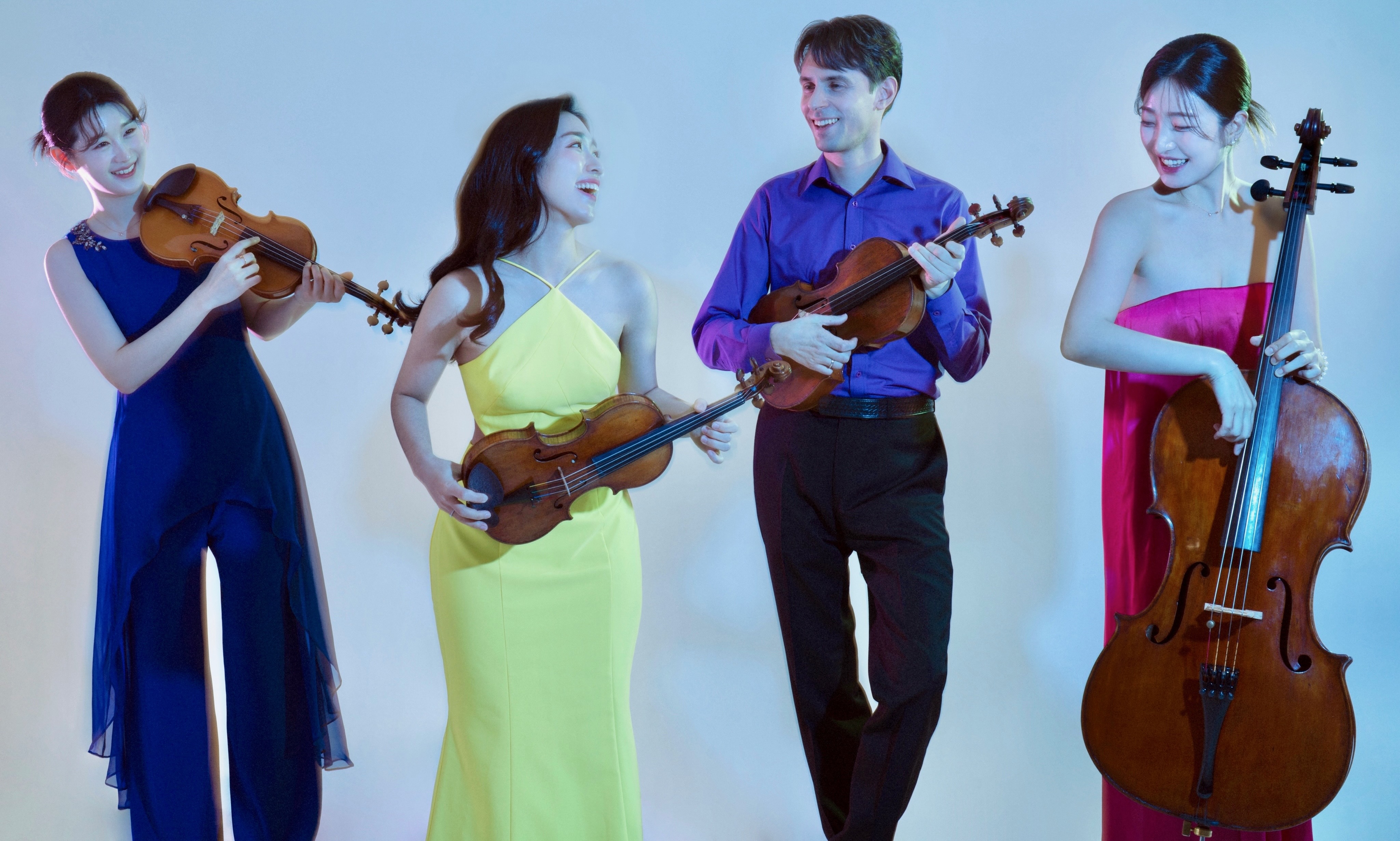
March 16, 2025 Esmé Quartet PROGRAM Kui Dong “Spring” from Spring, Summer, Autumn and Winter (2006) Juri Seo “Fall-Winter” from String Quartet Infinite Season (2017-18) Ravel String Quartet (1903) Beethoven String Quartet #14 in C# minor, Op.131 (1826) |
 |
MUSIC
Dartmouth Professor Kui Dong's “Spring” pulsates with nature's energy of re-growth. • Princeton Professor Juri Seo's Infinite Season portrays nature's annual cycle of changes from season to season, sound by sound. • Ravel's Quartet is prized for classical sense of form, modern yet tonal melody and harmony, and vital and subtle rhythmic motion. • Beethoven's C# minor Quartet Op.131 was his favorite and is for many the greatest of his late quartets.
ARTISTS
The Esmé Quartet, formed in 2016 by four friends from Korea at Cologne's Hochschule für Music, tours worldwide to
international acclaim. In 2023, violist Dimitri Murrath, San Francisco Conservatory's Chair of Chamber Music, joined Esmé. Their March 2023 concert for us was
a hit!
“[They] play with depth and maturity ...” (Suddeutsche Zeitung)
“Lyricism and airy limpidity, ... profundity and unexpected allure.”
5 stars (Diapason, France)
|
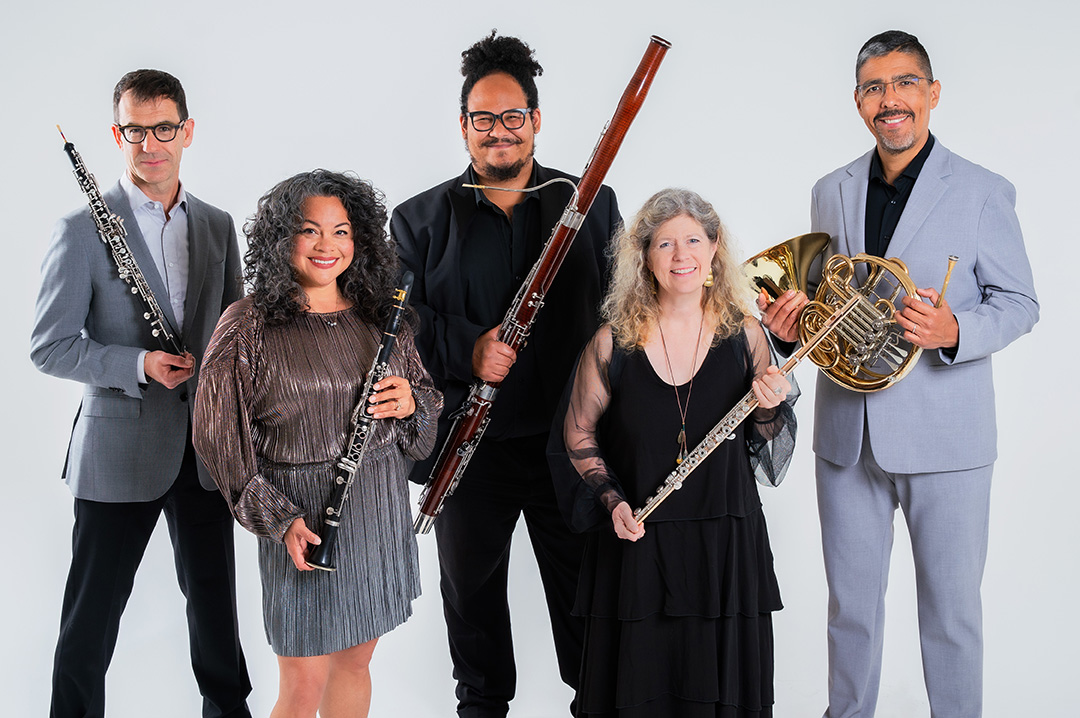
May 17, 2025 Quinteto Latino PROGRAM Paquito D'Rivera Wapango (1996) Ronaldo Miranda Variações Sérias sobre um tema de Anacleto Gerardo Matos Rodriguez and Astor Piazzolla Tango Suite (Pulitzer Prize winner) Tania León De Memorias (2000) Júlio Medaglia Belle Epoque en Sud-America (2002) Folk song Son de la Bruja Astor Piazzolla Libertango (1974) |
 |
MUSIC
The quintet's repertoir–and this concert's music–spans the full spectrum of Latino musical heritage from traditional compositions to cutting-edge works.
ARTISTS
Founded in 2004 by hornist Armando Castellano, Quinteto Latino is a dynamic ensemble of top Bay Area musicians which showcases
classical and contemporary music of Latin America and Latina/o/e composers everywhere, while engaging diverse communities through music. Quinteto Latino is strongly
committed to new music, commissioning many works over the years. Notable successes include their 2011 CD 100 Años de Música
Mexicana para Quinteto de Alientos, their May 2024 premiere of Carla Lucero's opera Chicanísima (QL commission),
and concerts across the U.S.
“Consummate virtuosity” (Maria Nockin, Fanfare Magazine)